



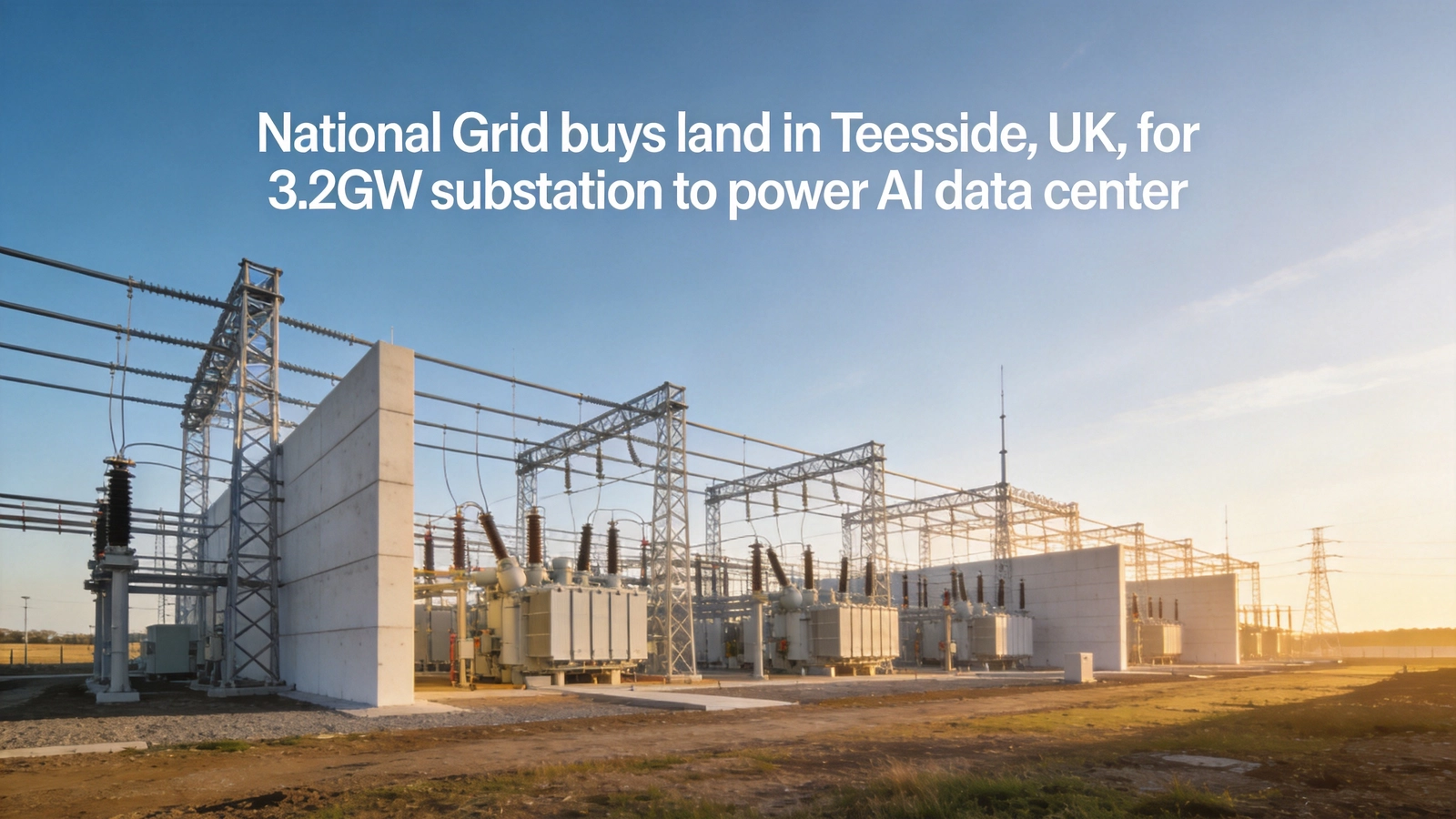
Matt Pearce, National Grid's head of land, said the land deal marks an "important step forward" in the new substation's development, adding that the company is "committed to working closely with our partners to progress the development as quickly as possible." The project previously faced objections from oil and gas giant BP, which argued the data center plan would hinder its attempts to build a hydrogen plant in the area; despite those concerns, the data center plan was approved last August, and BP subsequently scrapped its hydrogen project later that year.
The Teesside substation is the latest in a series of grid infrastructure investments National Grid has announced to meet surging electricity demand from the data center sector. In November last year, the company commenced upgrade work at its Didcot substation in Oxfordshire to support data center growth in the region, and it has also begun construction at its Uxbridge Moor substation in Buckinghamshire, which is expected to supply electricity to more than 12 new data centers and will become the largest substation in the UK when completed, with a target date of 2029. The scale of the 3.2GW Teesside project reflects how transmission operators are being forced to front-load major grid reinforcements years ahead of actual data center load coming online, a shift that carries significant implications for construction timelines, permitting, and the overall pace at which AI infrastructure can be deployed in the UK.