



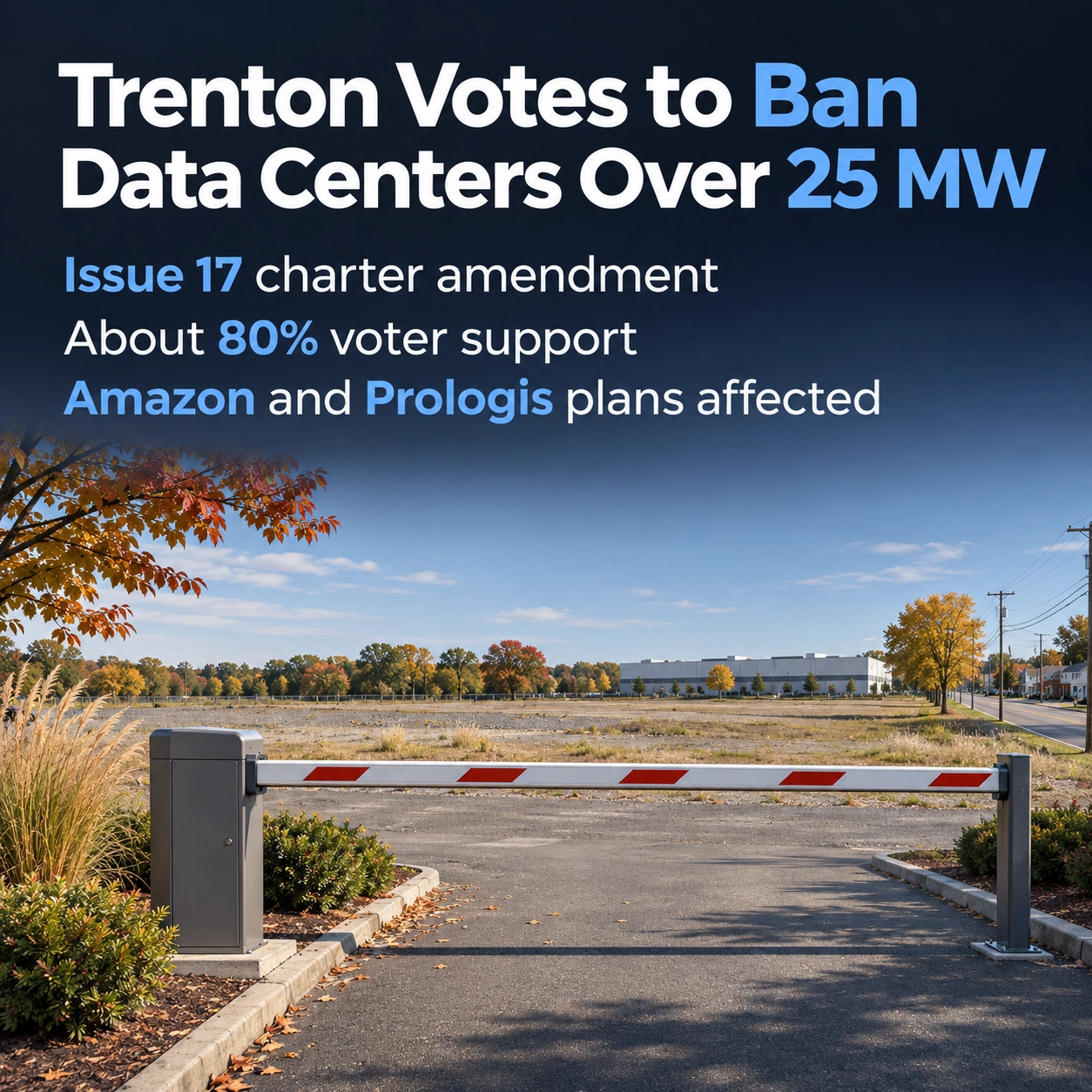
The measure's passage means developers looking to bring data centers to Trenton will need to keep projects under 25 megawatts, effectively blocking plans for the city to annex land for a 1,000-megawatt Amazon data center and casting uncertainty over the future of a 250-megawatt facility currently under construction by Prologis in the city's industrial park. The vote represents a direct rebuke to those projects and to the economic incentives that city officials had promoted alongside them.
Issue 17 faced organized opposition from a group funded by outside interests, including the Ohio Chamber of Commerce and Prologis. The Trenton Community Alliance canvassed neighborhoods, distributed yard signs and ran advertisements against the ban, arguing that it would limit economic opportunities for the city. Trenton officials had said building the data centers would provide a host of financial benefits for residents, including a one-year elimination of the city's general fund property tax, a 30% discount on YMCA memberships and millions of dollars for Edgewood City Schools. Supporters of the ban, however, celebrated at Barn N Bunk Farm Market, eating a cake with blue lettering reading "vote yes on Issue 17" as a musician plucked out folk protest songs on his guitar.
The Trenton vote is part of a broader wave of local resistance to data center development across Ohio and the nation. Seventeen other communities in Ohio also voted on data center-related ballot measures on Tuesday — the most of any state in the country — signaling that concerns over power consumption, water use and local land impacts are becoming a potent political force. For the data center industry, the outcome in Trenton illustrates the growing difficulty of siting large facilities in communities that once welcomed them, and the risks that developers and utilities face as they race to expand capacity to meet demand for cloud computing and artificial intelligence workloads. The ban also raises questions about how states and municipalities will balance the economic benefits of data center investment against the infrastructure and environmental costs that residents increasingly refuse to absorb.