





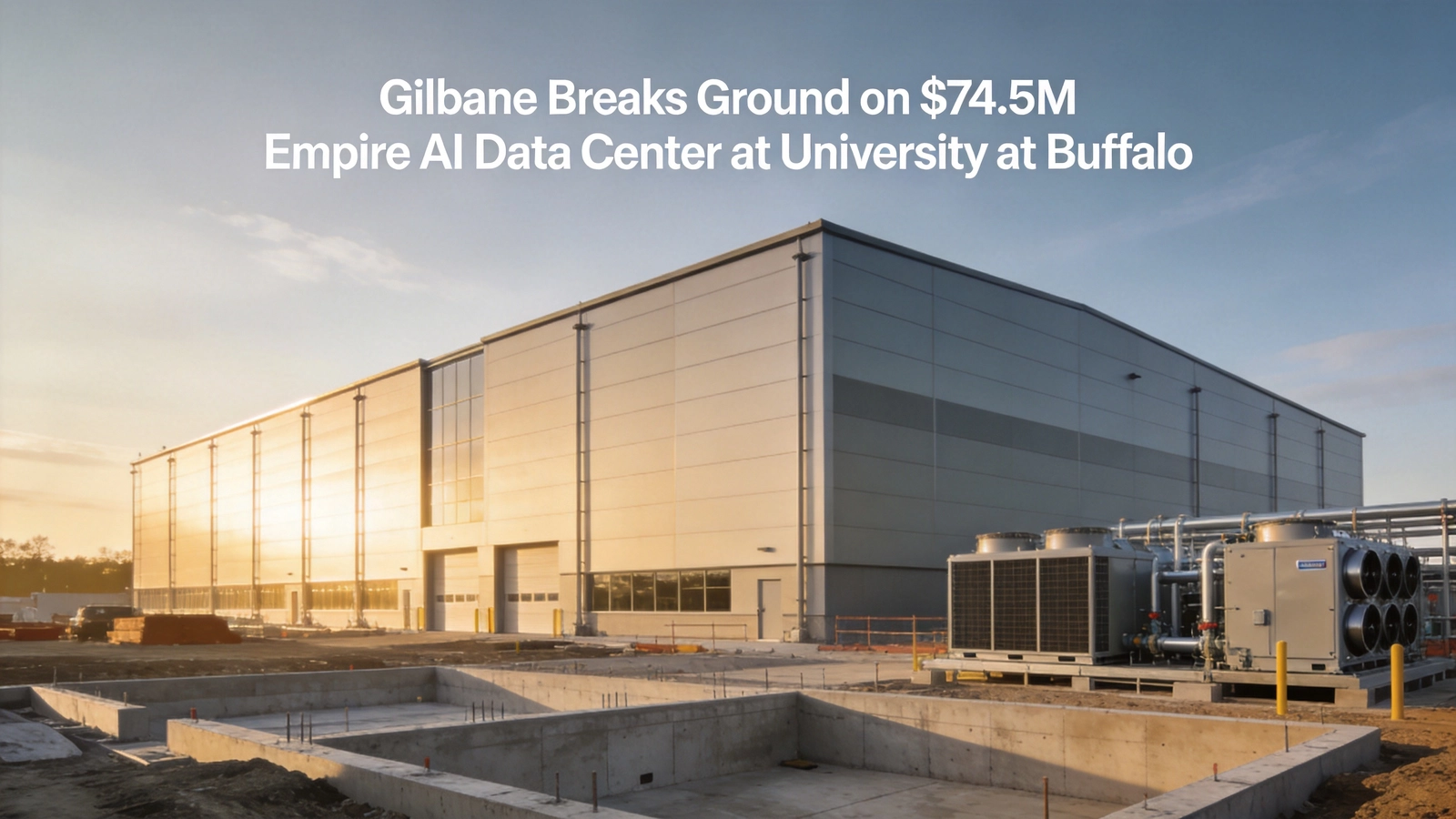
A key feature of the project is its approach to energy recovery and reuse. The University at Buffalo plans to capture heat generated by the facility's high-performance computing infrastructure to warm campus buildings. The center will use clean hydropower and connect to the university's Baker Chilled Water Plant, with a system of pipes, geothermal wells and advanced heat pump technology enabling the university to redistribute recovered energy back to the campus, reducing overall energy consumption. "As construction manager, Gilbane is proud to help deliver a facility that will expand access to powerful computing resources, helping researchers tackle critical challenges in healthcare, climate science and other areas that impact our communities," Treichler said. "The project also demonstrates how advanced technology construction and environmental stewardship can go hand in hand, with a plan that supports the University at Buffalo's plans to capture and reuse heat across its North Campus."
The project carries added significance given New York's regulatory environment. In July, Hochul paused certain state environmental permits for new data centers in order to study their effects on energy demand and water use. The executive order, however, exempts facilities primarily used for research or education and specifically names the Empire AI consortium, underscoring the state's commitment to advancing AI research capabilities while balancing energy and environmental concerns. The Empire AI data center is positioned to serve as a test case for how research-oriented computing facilities can integrate with campus energy systems and contribute to sustainability goals, even as broader scrutiny of data center power consumption intensifies across the country.